Longform

In-depth investigations, probing narratives, and rigorous examination of the forces shaping science and technology.

4 articles

When Quantum Computers Learn to Compute Without Letting Go of Control
Quantum & Computing01

When Quantum Computers Learn to Compute Without Letting Go of Control

A quiet experiment in Zurich reveals that the future of quantum computing may depend not on eliminating errors — but learning how to live with them

By Opinions and Analysis Department at NovaReason

Toward a Neurocognitive and Quantum-Compatible Hyperspace for Natural Language
Artificial Intelligence02

Toward a Neurocognitive and Quantum-Compatible Hyperspace for Natural Language

Toward an Integrated Linguistic Framework Combining Neurocognitive Models and Quantum Knowledge: Transparent Representation of Linguistic Meaning, Distinguishing Reality from Counterfactuals, and Enabling Interpretable Text Processing Aligned with the Brain’s Handling of Time, Space, and Meaning.

By Nizar El Imrani

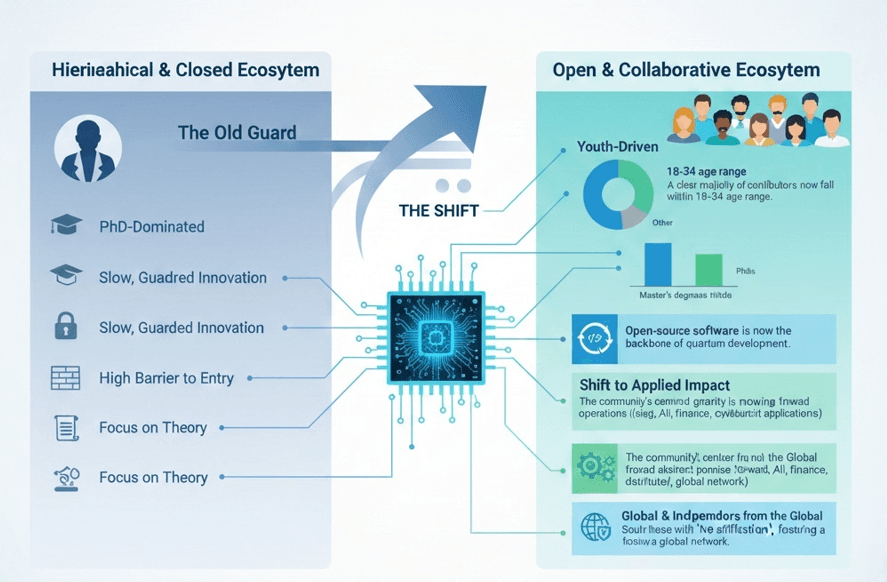
The Quantum Generation: How Open Source and Youth Are Rewriting the Rules of Quantum Computing
Quantum & Computing03

The Quantum Generation: How Open Source and Youth Are Rewriting the Rules of Quantum Computing

The Quantum Generation: How Open Source and Young Contributors Are Reshaping Quantum Computing – Flattening Hierarchies, Democratizing Access, Accelerating Knowledge Transfer, and Driving Pragmatic, Applied Innovation Beyond Traditional Academic Gatekeeping

By Asia Alhammadi

Why Future Security Advantage Will Be Determined by Systems Integration and Trust Frameworks—Not Raw Computational Power Alone
Cybersecurity04

Why Future Security Advantage Will Be Determined by Systems Integration and Trust Frameworks—Not Raw Computational Power Alone

For much of the past two decades, security advantage—whether national, institutional, or enterprise-level—has been closely associated with access to superior computational capability. Faster processors, larger data sets, more advanced algorithms, and increasingly powerful artificial intelligence models have been treated as decisive differentiators. That assumption is now reaching its limits.

By John Keith King

Stay Informed with NovaReason

Get weekly analysis of the most significant developments in science, technology, and policy. Thoughtful perspectives delivered to your inbox.

No spam. Unsubscribe anytime. See our privacy policy.